Blog

The Coherence Papers.

An ongoing series on coherence in robotics — why getting a machine's senses to agree on when is what turns capable parts into reliable action. Written for engineers, partners, and the curious.

Why Robots Can't Move Like Humans Do

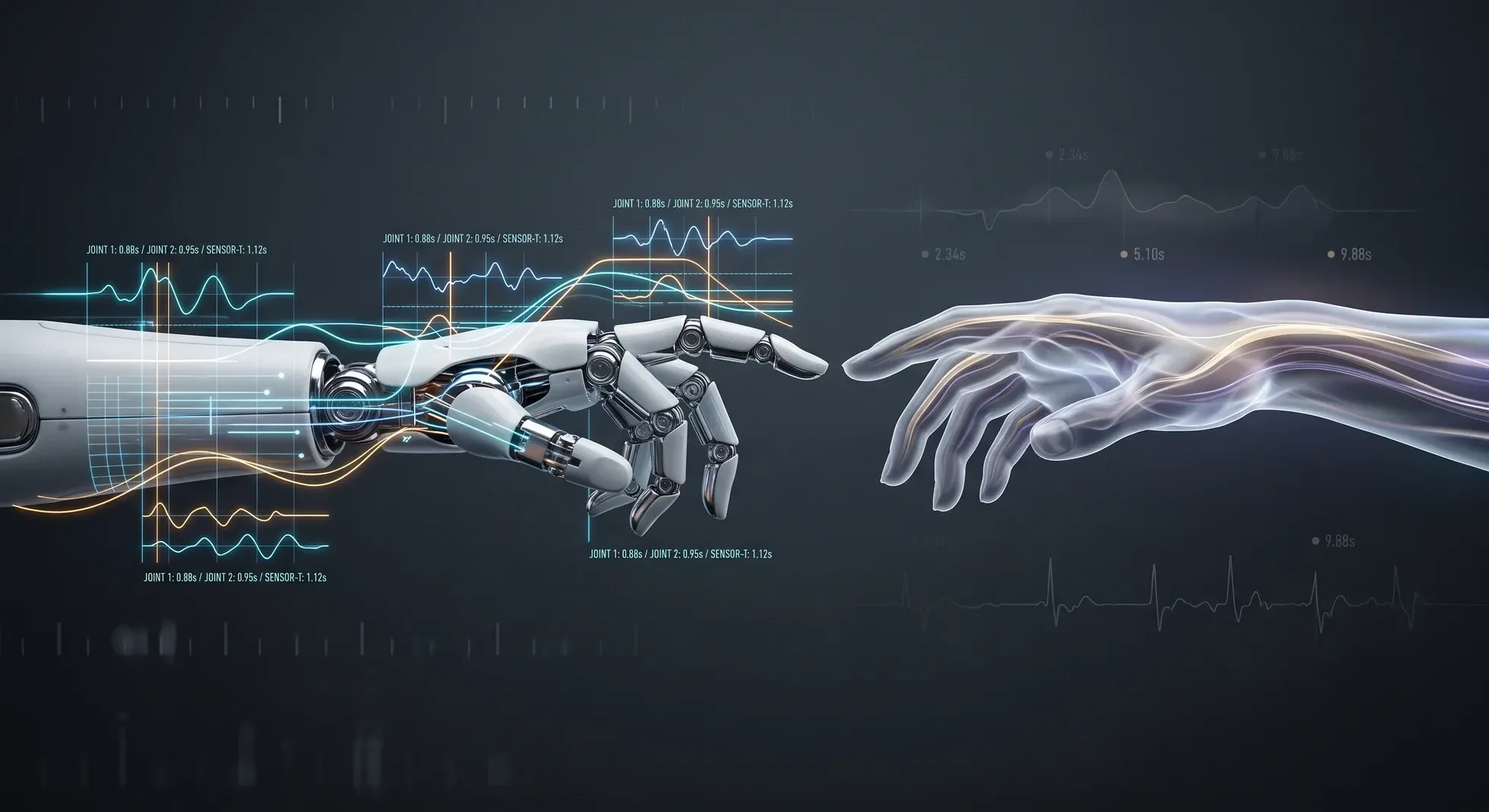
Humanoid robots can now walk, grasp, and navigate on their own — yet they still hesitate handing over an object, stumble when a variable shifts, and fail when the lighting changes. These aren't isolated bugs; they're symptoms of a deeper architectural problem. Part I of The Coherence Papers argues the real bottleneck for humanoids isn't intelligence or sensing but coordination: getting dozens of independent subsystems to agree on what is happening, where, and — crucially — when.

Read the note
A white robotic hand reaching toward a translucent human hand, overlaid with sensor timing waveforms and per-joint latency readouts.
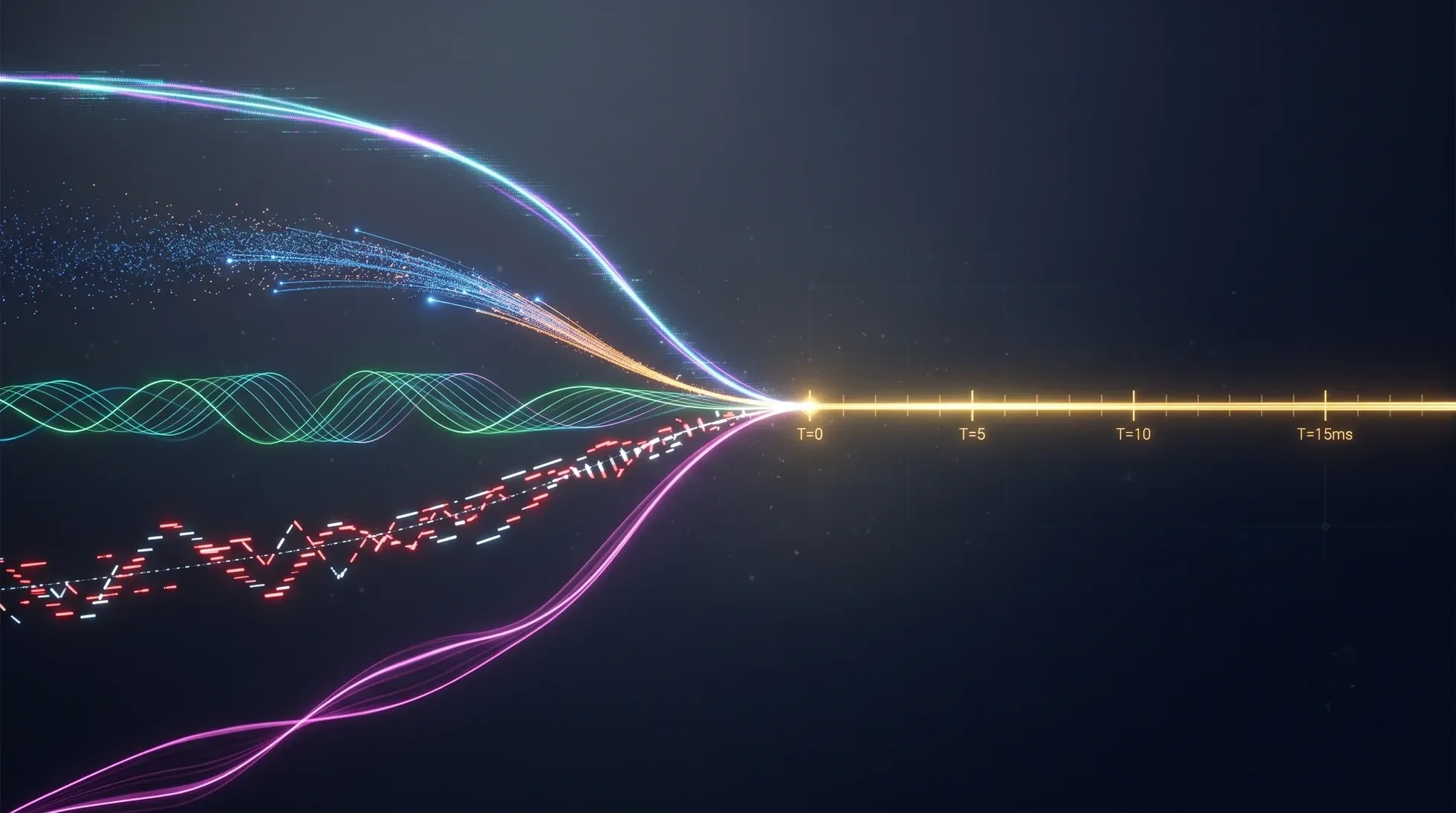
Multiple colored sensor signal streams converging into a single bright instant at T=0, then continuing as one aligned golden timeline.

Time: The Invisible Sensor

Time measures no light, no sound, no motion — and yet every sensor depends on it to mean anything. Part II of The Coherence Papers reframes time not as metadata stapled onto a measurement after the fact, but as the common reference that lets a camera, a LiDAR, and an inertial unit describe the same instant instead of drifting apart. Like an orchestra where every musician plays flawlessly to a slightly different beat, a robot whose subsystems don't share a sense of time turns capable parts into noise.

Read
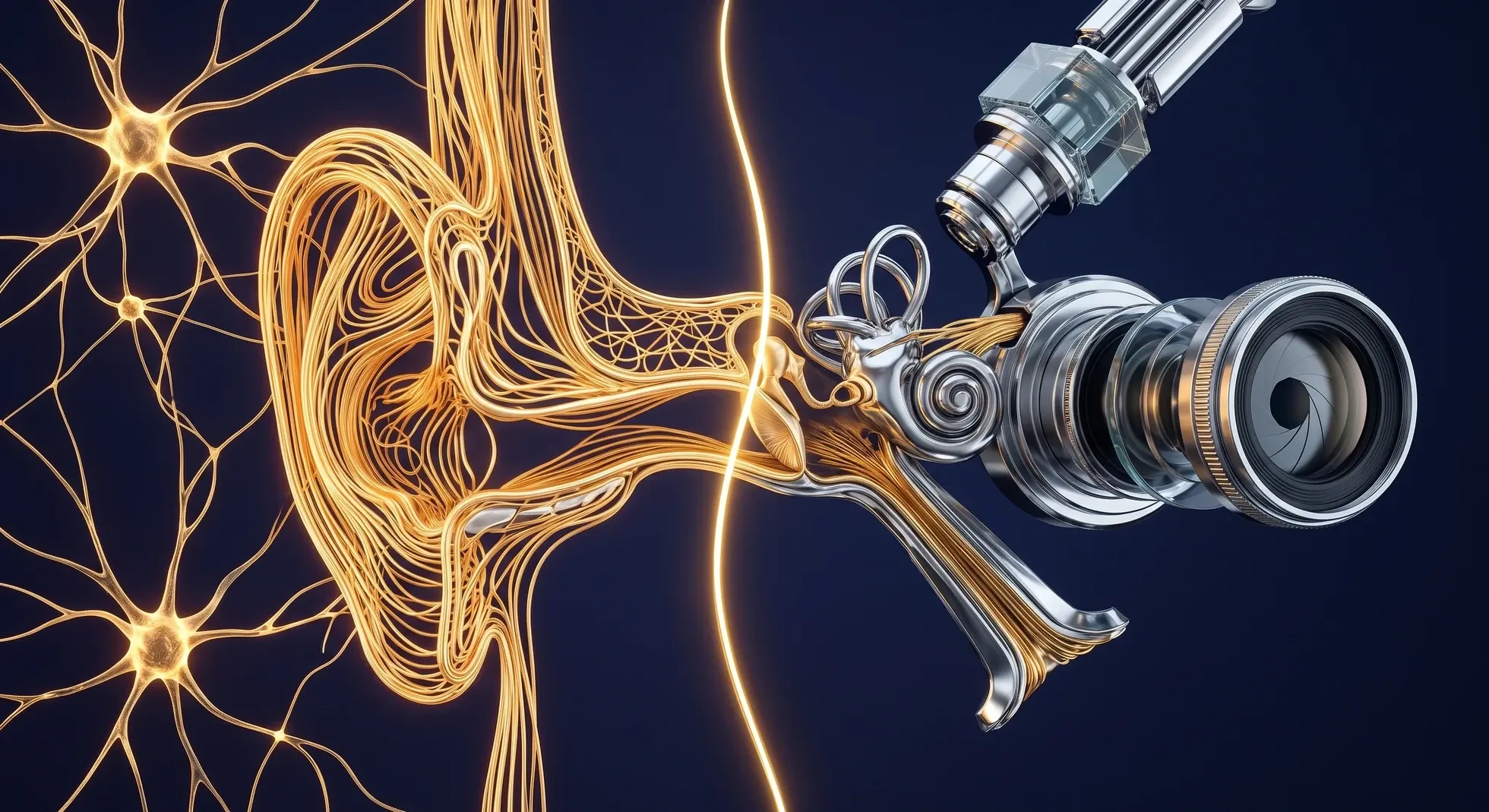
A golden anatomical nervous system and inner ear on the left transitioning into a chrome robotic camera and lens on the right, split by a bright dividing line.

From Reflexes to Reason: What Biology Can Teach Robotics About Coordination

Modern AI keeps getting smarter — but intelligence isn't the same as coordination, and a brilliant system can still stumble on uneven ground. Part III of The Coherence Papers turns to the one that already solved the problem: biology. An emergency physician draws the lesson from vertigo — when the senses disagree, a dizzy patient at least feels the alarm, while a robot whose camera and inertial sensors fall out of sync simply proceeds, confidently and wrong. It's a look at silent failure, and what the body's distributed nervous system teaches robotics about avoiding it.

Read
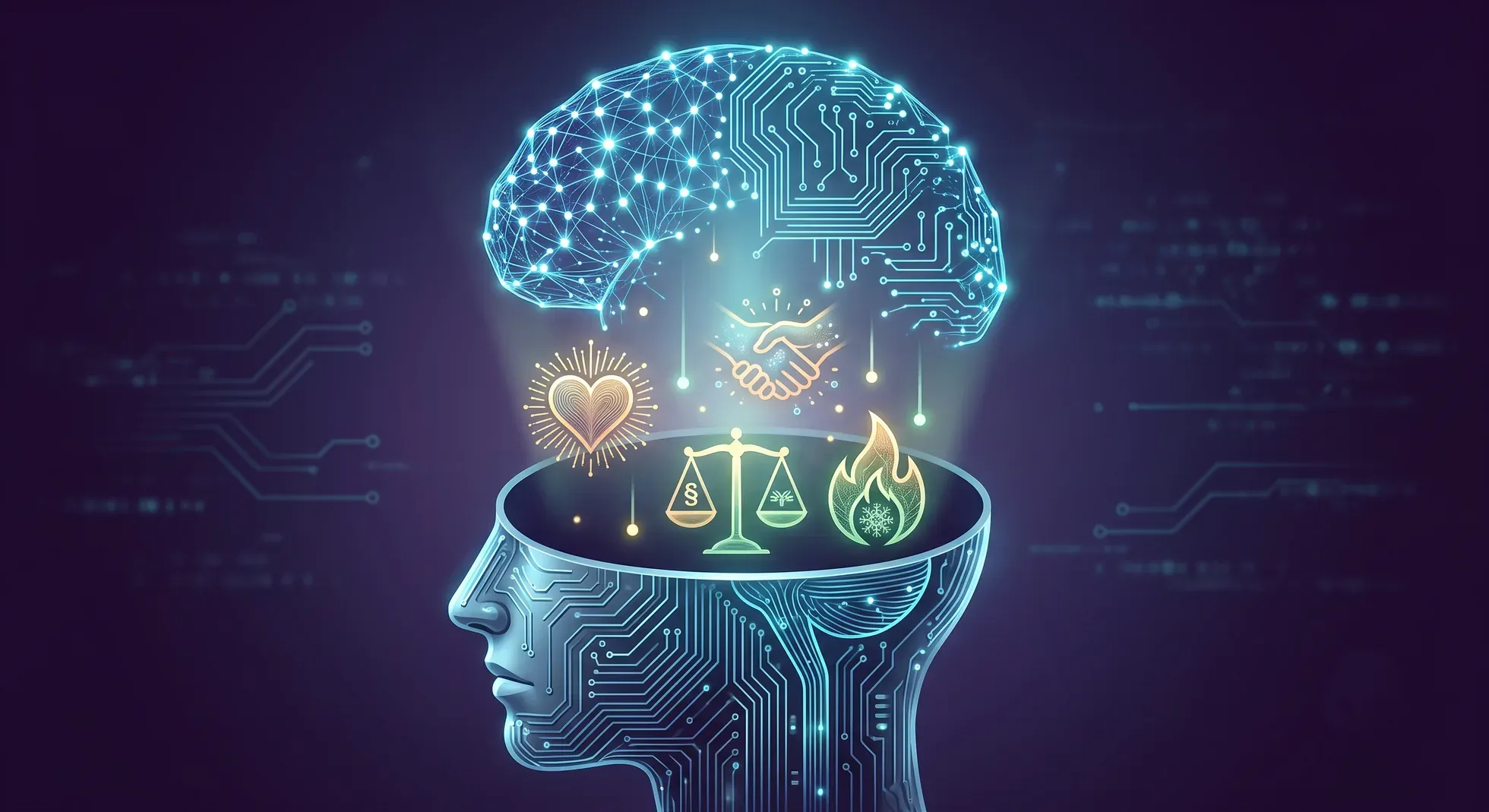
A glowing circuit-board profile of a human head, open at the top, with a luminous networked brain floating above it sending light down into icons of judgment, empathy, and cooperation.

Intelligence Is Not Enough

Modern AI can write software, solve difficult mathematics, and hold conversations that would have seemed impossible a few years ago — but the moment intelligence enters a physical body, another problem appears. Part IV of The Coherence Papers imagines the world's best model inside a robot whose camera, force sensors, and inertial unit are each perfectly accurate yet describe different moments, and asks what all that flawless reasoning is actually reasoning about. The argument runs from why a delayed measurement can still be useful while a fast one can be harmful, to why the goal was never to eliminate latency but to preserve meaning across it. Intelligence tells a system what its information means; coherence tells the system whether that information belongs together.

Read
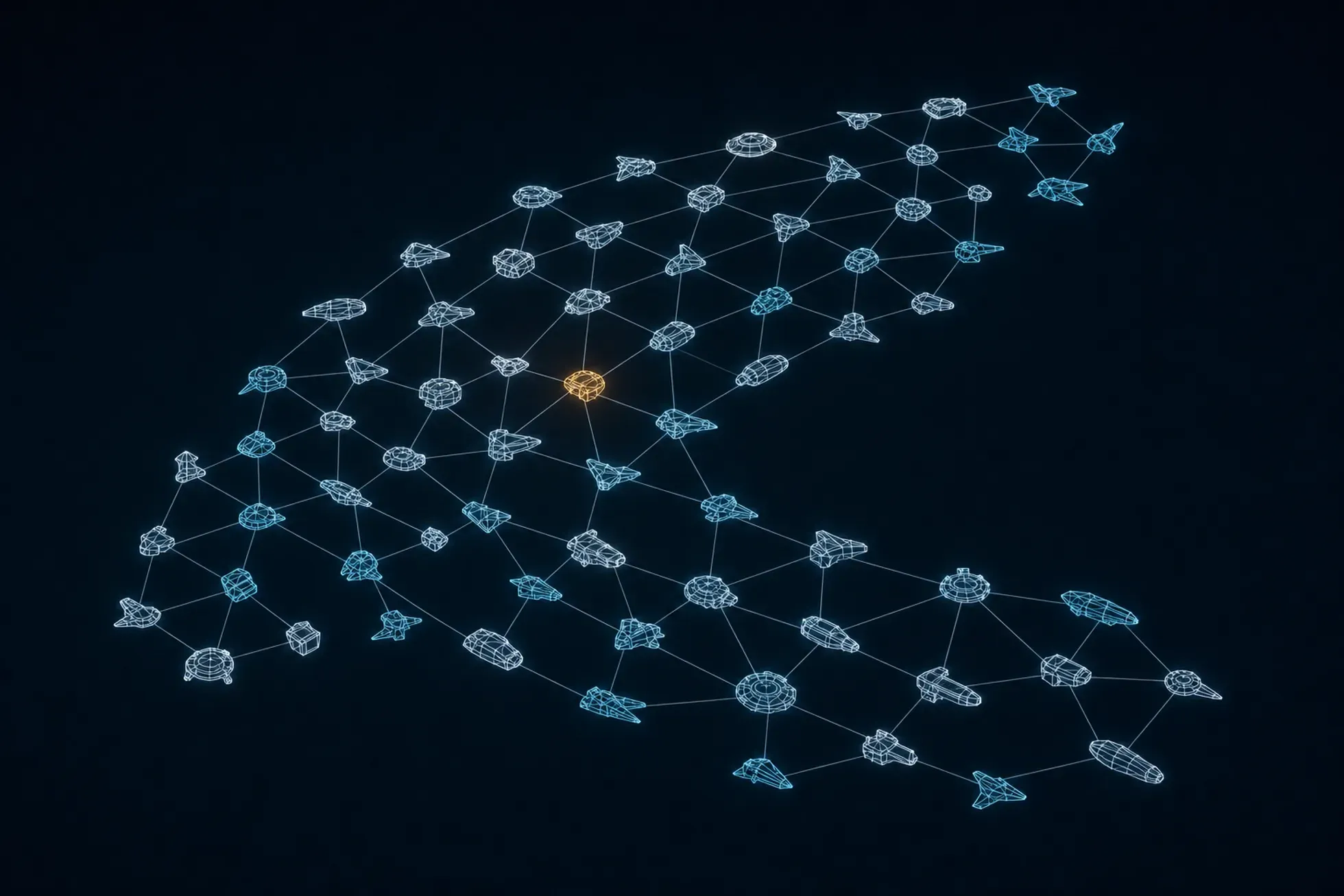
A decentralized network of small wireframe glyphs of varied shapes arranged in a curved, banking formation, each connected only to its nearest neighbors by thin lines, with one glyph near the center glowing amber against the rest in cool white and cyan.

The Birds and the Bees (And Let Us Not Forget the Fish)

The seventh little side trip, and it starts with a promise: this isn't that conversation. Watch a flock turn as one, a school fold around a threat, a hive run entirely on specialists with no one in charge — and a stranger pattern comes into view. The flock and school get their order from difference that stays connected; the hive adds a further twist, where the differences aren't just tolerated but load-bearing. An orchestra makes the same point in a register we're more used to hearing.

Read
Several faint overlapping wavefronts of light converging toward a single bright point on a black background, most fading before they arrive; one wavefront carries a warm amber glow that persists all the way to the convergence point.

Medicine Taught Me How to Decide Before I Knew Enough

Another little side trip, this one about what happens when the patient is in front of you and the picture is still incomplete — the family isn't there yet, the labs are pending, the scan hasn't been read. Years in the emergency department taught a way of deciding between paralysis and recklessness that had nothing to do with knowing the right answer in advance. That habit turned out to travel a lot further than medicine, into a field with no formal training in it at all.

Read
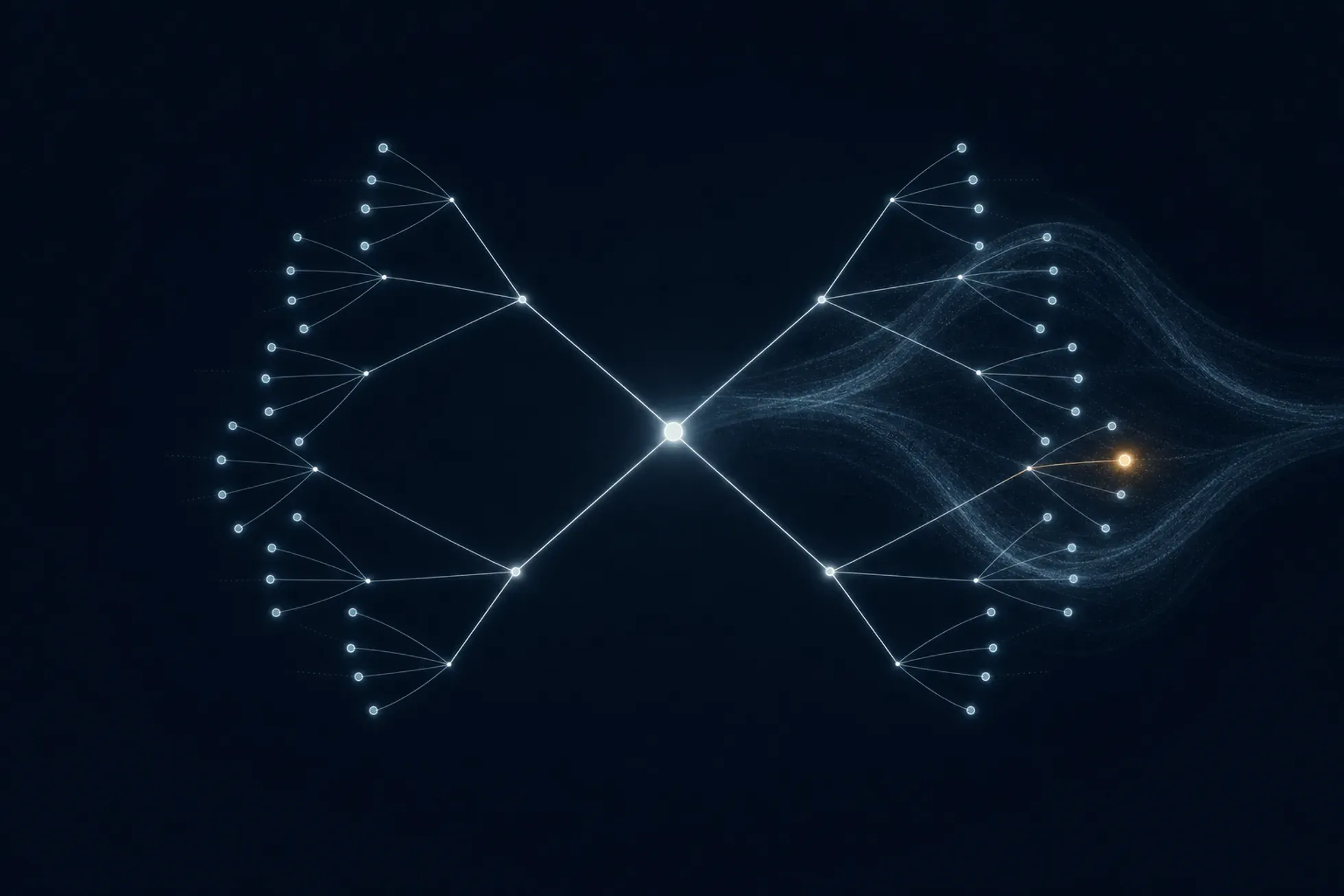
A symmetric decision-tree diagram: a single bright central node from which two branching structures spread to the left and right, each dividing into progressively finer branches that end in a scattered field of small nodes; a faint translucent wave sweeps across the right-hand tree, where one distant node glows warm amber while every other node stays white and cyan against a near-black background.

Decision Quality Is Not Outcome Quality

The sixth little side trip, and it opens with one of the most argued plays in football: the pass Seattle threw from the one-yard line, intercepted, game over. The verdict was instant — a terrible decision — but the interception is the outcome, not the reasoning that came before it. A wildfire and two neighboring families make the cleaner case: both chose before the wind turned, and a safe morning didn't prove either one right. A bad outcome does not prove a bad decision, and a good outcome does not prove a good one.

Read
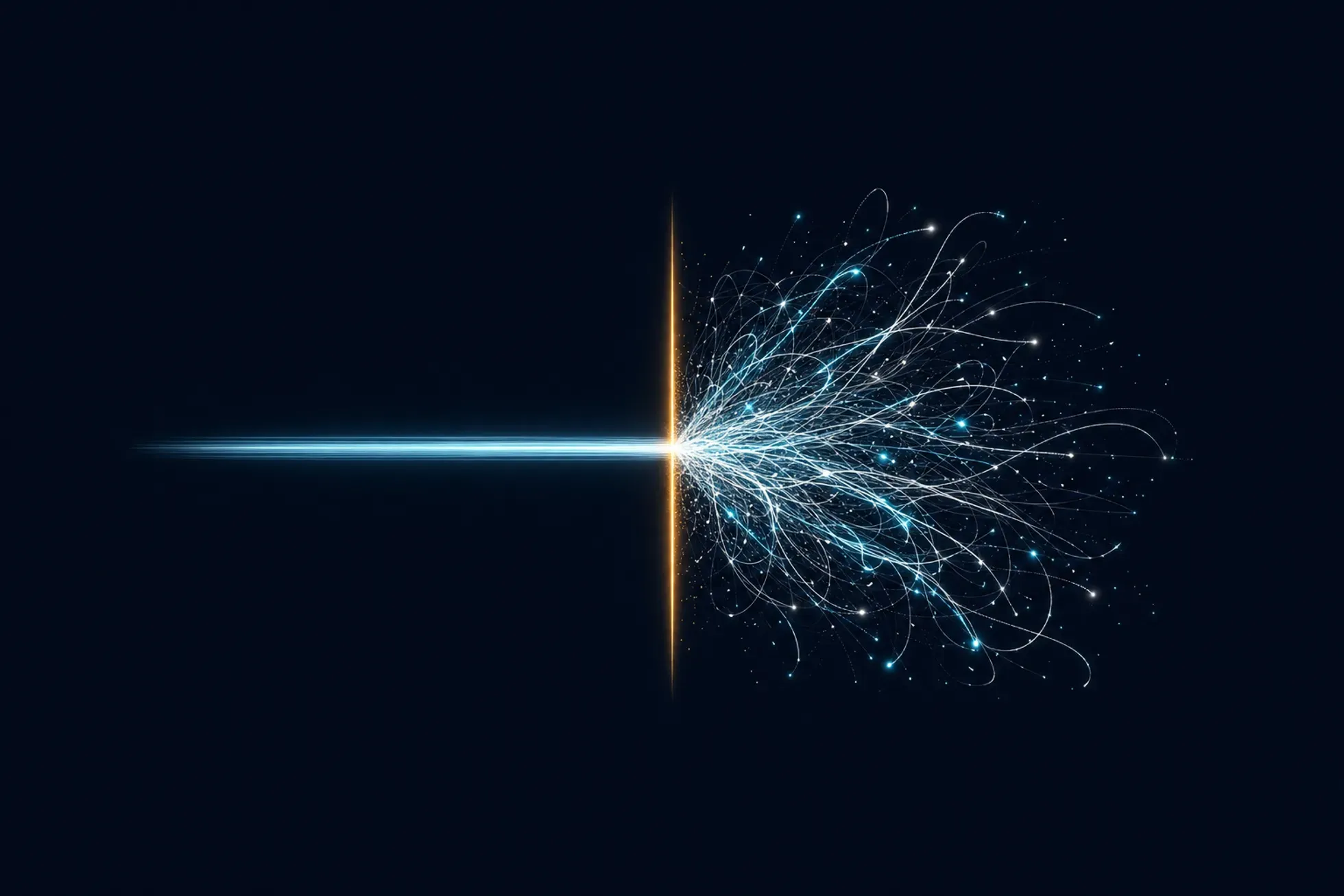
A single tightly bundled beam of cyan light travels in from the left, crosses a thin vertical amber line at the centre of the frame, and immediately past it bursts apart into a wide spray of scattered white and cyan filaments, arcs and sparks fading into a near-black background.

Where Does the Task Actually End?

A moment of levity, starting at a race track. Humanoid robots ran the 100-meter dash faster than the fastest human ever has, and then several of them crashed, broke apart, or caught fire. The funny part hides a serious one: if the task was only to cross the line quickly, the robots did exactly what was asked. Stopping was a different task — and a benchmark can only measure what we thought to ask it.

Read
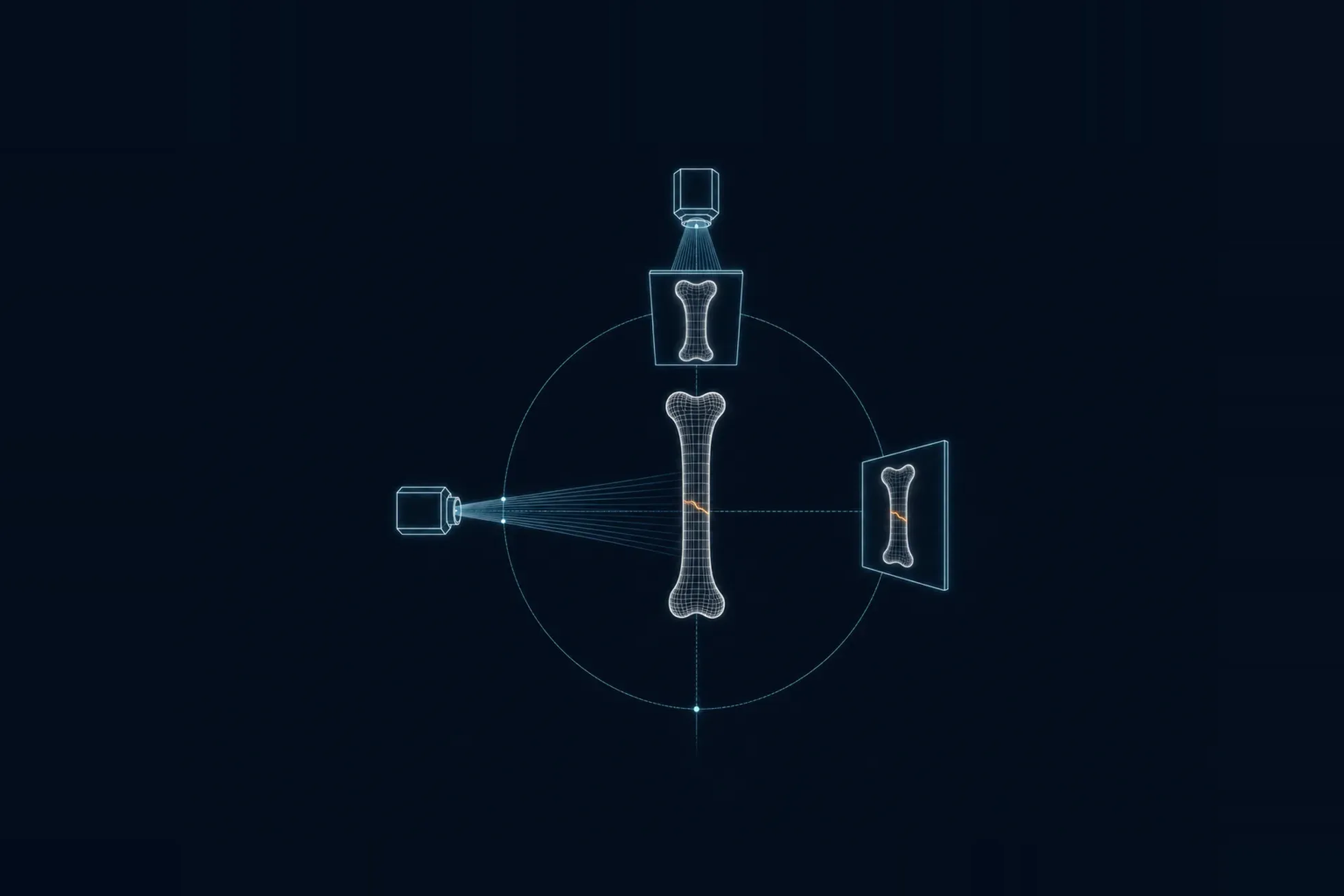
A wireframe long bone at the center of a schematic diagram, with one imaging emitter above it and one to its left, each casting a cone of light onto a detector plate; the upper plate shows a clean unbroken bone outline while the right-hand plate shows the same bone crossed by a glowing amber hairline fracture.

When Two Witnesses Tell Different Stories

Another little side trip, this one starting at a busy intersection. Two witnesses see the same crash and give the officer two different accounts, and the reflex is to decide which one is wrong. But they encountered the same reality from different corners, watching different things, at different moments. Medicine has a cleaner version of the same problem: a fracture invisible on one X-ray view and obvious on the next. The bone didn't change — the angle did.

Read
A vast spiralling cloud of thousands of tiny cyan points scattered across a near-black field, drawn inward along faint concentric arcs to a single small, bright amber core at the center.

Why Doctors Don't Order Tests

Another little side trip, this one from the middle of an emergency department shift. From the outside, ordering blood work and a chest X-ray looks like collecting information. But after enough years of practice, that's not quite what it feels like from the inside — a normal scan can be as valuable as an abnormal one, and a single conversation can be worth more than either. Maybe information was never the destination, just one of the ways we reduce uncertainty. And if that's true in medicine, it's probably true of buying a house, choosing a school, and deciding whom to trust.

Read
A robotic hand of many glowing wireframe tool-arms on black; one arm ends in a metallic emitter firing a thin amber beam into a falling column of luminous cyan data glyphs.

Sensor Fusion Is Not a Democracy

Another little side trip, this one starting with ten thousand spoons and a Swiss Army knife. When five sensors agree and a sixth disagrees, the obvious move is to trust the five — except sensors aren't votes, and the better question is what the system is actually trying to do right now. In the emergency department the same distinction is routine: an X-ray doesn't get one vote alongside heart rate, breathing, and temperature. And sometimes the measurement that doesn't fit isn't the wrong one — it's the one holding the knife.

Read
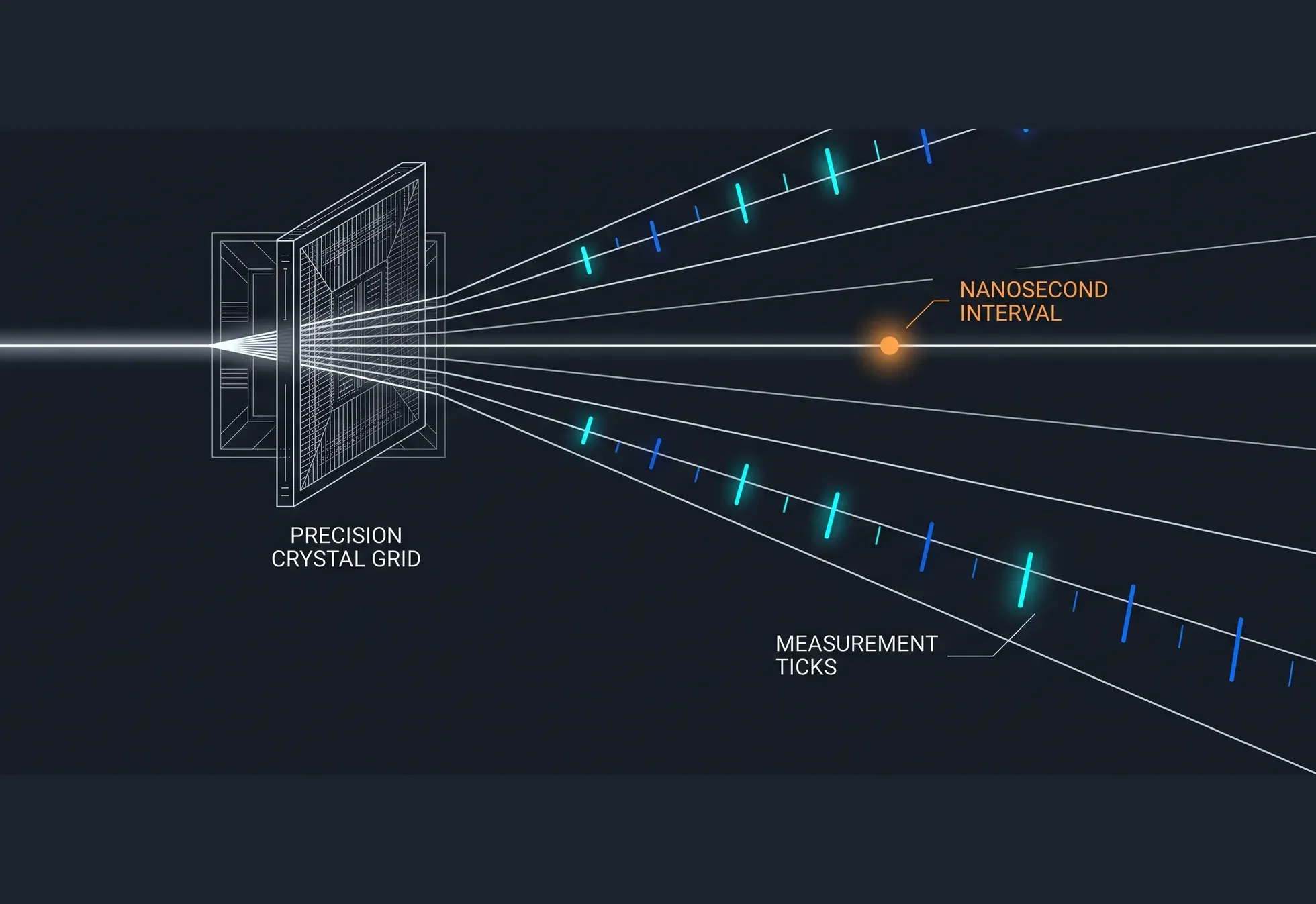
A dark technical diagram: a white beam passes through a wireframe precision crystal grid and fans out into diverging streams marked by glowing blue and cyan measurement ticks, with a single amber point on the center line labeled "nanosecond interval."

How Long Is a Nanosecond?

Another little side trip. How tall is tall? The number matters, but so does the reference — and time may work the same way. Stretch a single nanosecond until it lasts one human second, and a microsecond becomes a seventeen-minute wait, a hundred microseconds becomes more than a day, and one second stretches across three decades. The point isn't that machines experience time this way. It's that we keep using our own nervous system as the ruler.

Read
Two wireframe hands drawn in glowing blue on black, poised to clap, with a bright blue waveform running between them and a second amber waveform slightly out of phase beneath it.

Why Two People Can't Clap Together Over a Video Call

A little side trip after several essays in deep water: nothing technical, no diagrams, just something ordinary that has probably happened to you. Try clapping in unison with someone over a video call and it almost never lands together — and the reason isn't bad timing, a slow connection, or a failed part. Each person is responding to a slightly different version of "now." It's a small, funny failure that raises a much larger question about what we look at when something stops working.

Read