When Two Witnesses Tell Different Stories
Two people watched the same accident and told the officer two different things — and the more interesting question isn't which one was lying.
 Vince Truong, D.O.Founder, Neurobotics IP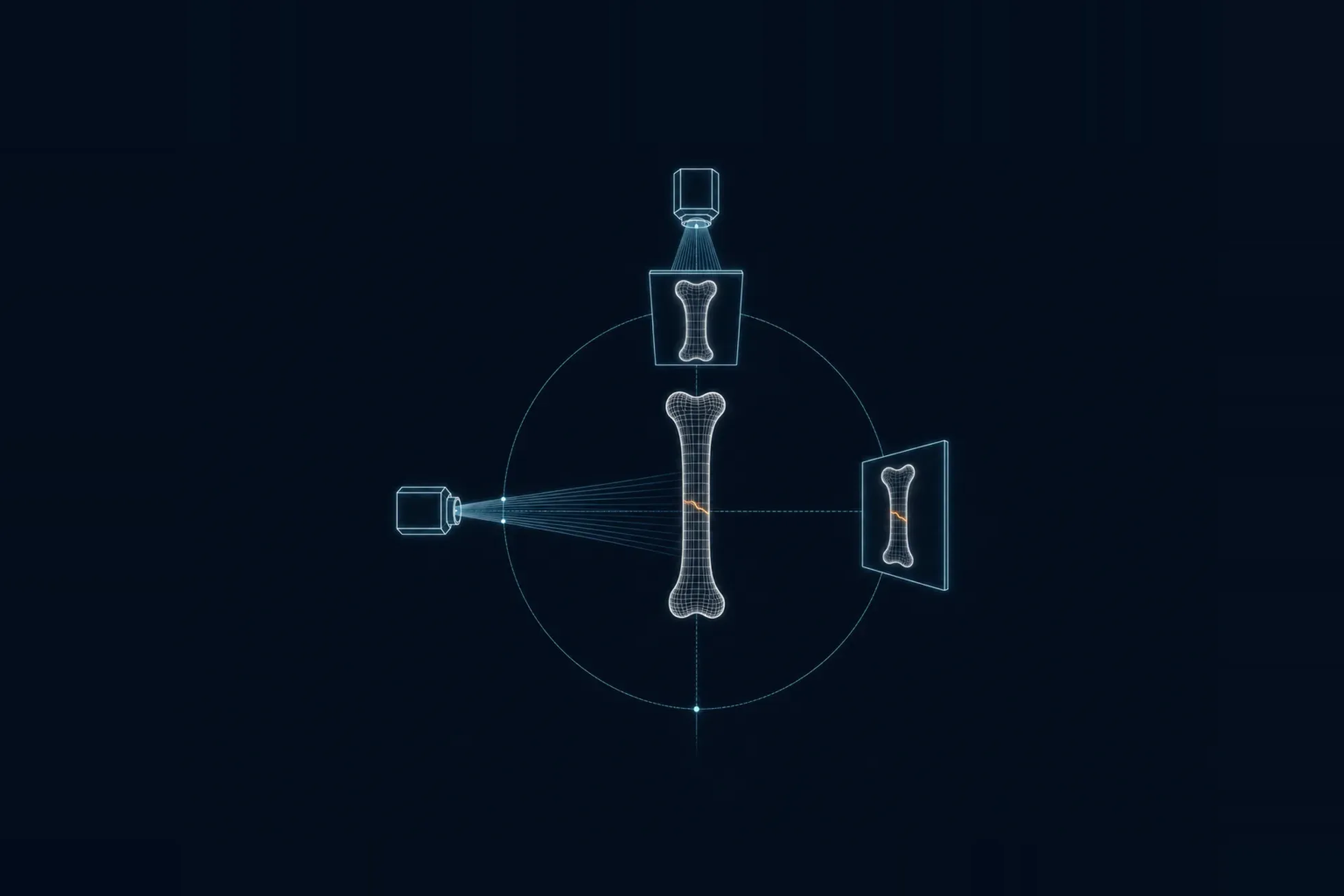
A Little Side Trip
I’ve been thinking about something.
Imagine two people standing on opposite corners of a busy intersection.
A car suddenly swerves. Tires screech. Metal collides with metal.
Both people witnessed the same accident.
A police officer arrives a few minutes later.
“The blue car ran the red light,” the first witness says.
“No — the truck turned too quickly,” the second says.
At first glance, someone must be wrong.
After all, there was only one accident. One intersection. One sequence of events.
One reality.
But perhaps the more interesting question is this:
Did they actually observe the same parts of the event?
Of course they witnessed the same accident. But they did not witness it from the same place.
One person’s attention may have been drawn to the traffic light. The other may have been following the truck. One may have noticed the seconds before impact. The other may have focused on what happened immediately afterward.
They encountered the same reality.
But they did not receive the same evidence.
Medicine gives us a cleaner version of the same problem.
A fracture may be difficult to see on one X-ray view and obvious on another.
The bone did not change between images. The injury did not suddenly appear when the second picture was taken.
What changed was the angle from which we looked.
That is why we take more than one view — not because reality contains several truths, but because one perspective may not reveal all of it.
The more I think about it, the more I realize how often this happens.
Two siblings remember the same childhood differently.
Two coworkers leave the same meeting with completely different impressions.
Two readers finish the same book yet describe it in ways that barely seem related.
We often assume that disagreement means someone wasn’t paying attention.
Or worse — that someone isn’t telling the truth.
Sometimes that may be the case. People can misremember. Assumptions can distort what we notice. An observation can be incomplete or simply wrong.
But disagreement can also tell us something else.
Perhaps it reminds us that seeing isn’t only about what is in front of us.
It is also about where we are standing, what we are paying attention to, and when we looked.
That does not mean every observation is equally accurate.
Nor does it mean that truth is simply a matter of opinion.
Reality exists independently of us.
But each of us encounters it from a particular point of view.
That realization has made me a little slower to judge.
When two thoughtful people disagree, I find myself becoming curious before becoming certain.
What did one person notice that the other didn’t?
What assumptions did each of them bring into the moment?
What part of the story becomes visible only when both perspectives are considered together?
Sometimes, the fastest path to understanding is not choosing one observation and discarding the other.
It is asking whether each observation reveals a different part of the same reality.
I’ve been wondering…
How often do we mistake different perspectives for different truths?