The Coherence Principle
The capability of a distributed system depends not only on the capabilities of its individual parts, but on how well the meaningful relationships among those parts are preserved as the system changes over time.
 Vince Truong, D.O.Founder, Neurobotics IP
The Coherence Papers · Part V
Every field of engineering is guided by a few foundational ideas. Architects think in terms of load paths. Electrical engineers work with voltage, current, and impedance. Computer scientists distinguish hardware from software and computation from memory.
These principles do not prescribe one design. They provide a way of seeing the problem and shape the questions engineers ask before choosing a solution.
Robotics may need a guiding principle of its own.
Stating the principle
Across the first four Coherence Papers, I have argued that capable components do not automatically produce a capable system. A robot can have accurate sensors, powerful processors, advanced artificial intelligence, and precise actuators, yet still struggle to behave as a unified whole. Intelligence may interpret information and decide what to do, but its effectiveness depends on whether sensing, prediction, decision, and action remain meaningfully related.
This leads to what I call the Coherence Principle:
The capability of a distributed system depends not only on the capabilities of its individual parts, but on how well the meaningful relationships among those parts are preserved as the system changes over time.
The Coherence Principle is not a particular technology, protocol, sensor, clock, or AI model. It is a systems principle. It asks us to look beyond the performance of individual components and examine the relationships that allow them to function as one system.
A robotic arm on a conveyor belt
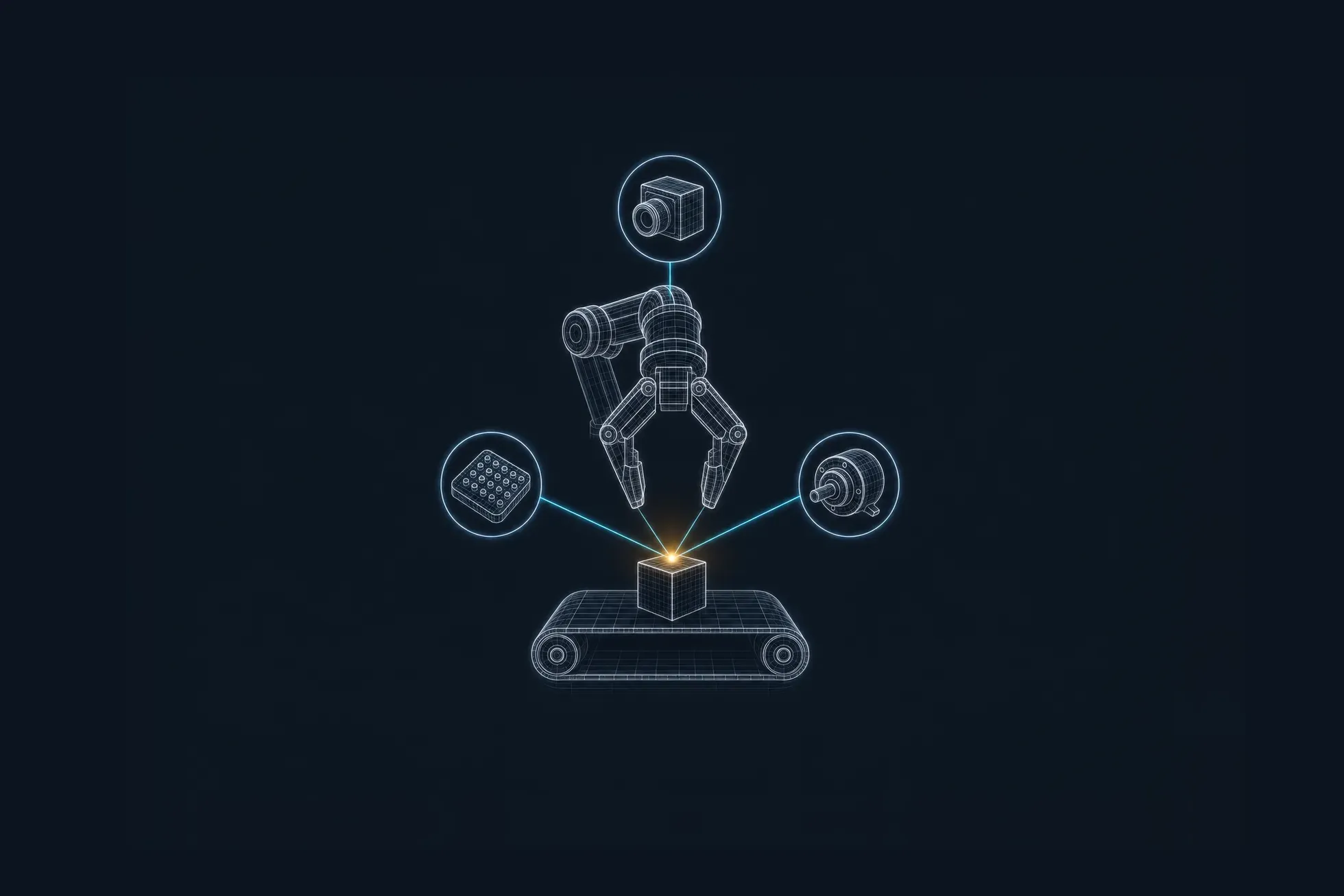
Consider a robotic arm reaching for an object moving along a conveyor belt. Its camera locates the object. Its software estimates the object’s position. Its planner calculates a path. Its controller moves the arm, and its tactile sensors detect contact as the gripper closes.
Each component may perform exactly as intended. Yet if the system loses track of the interval between when the image was captured and when the gripper closes, the robot reaches for where the object was rather than where it is.
Nothing is necessarily broken. The components have simply lost the relationship that made their individual contributions meaningful.
The camera measurement matters in relation to when it was captured. The planned trajectory matters in relation to the object’s movement. The motor command matters in relation to the arm’s present position. The tactile signal matters in relation to the intended stage of the grasp.
The system succeeds not merely because each part performs well, but because the relationships among perception, timing, prediction, and action remain sufficiently intact.
What the engineering question becomes
This shifts the engineering question. We should ask not only whether each component is accurate, fast, or powerful, but also whether the system preserves the meaning of the information passing among them.
Does a measurement remain connected to the event that produced it? Does a decision still apply to the state for which it was made? Does a local action support the objective of the whole, or is it executing a plan formed for a reality that no longer exists?
These questions also show that coherence is broader than synchronization.
Synchronization helps preserve temporal relationships. It allows a system to determine whether observations occurred together or how far apart they were. In embodied robotics, this is foundational. Cameras, inertial sensors, joint encoders, and tactile systems cannot be combined reliably if the system misunderstands when their measurements occurred.
But perfectly synchronized components can still fail to cohere. They may use incompatible coordinate systems, assign different meanings to the same event, pursue conflicting objectives, or preserve timing while losing causality.
Five kinds of coherence
Coherence therefore includes several kinds of relationship. Temporal coherence concerns when events occur. Spatial coherence concerns where they occur. Informational coherence concerns whether meaning is preserved as information moves through the system. Causal coherence concerns whether the system correctly relates causes and effects. Functional coherence concerns whether local actions support the larger objective.
These dimensions interact. A timing error can create a spatial error. A spatial error can produce a false causal inference. That misunderstanding can lead the planner to choose the wrong action, which the controller may then execute perfectly.
The failure appears in the movement, but its origin lies in a lost relationship.
Not uniformity
A coherent system does not require perfect agreement. Different sensors observe different aspects of the world. Different control layers operate at different speeds. Local subsystems may possess only partial information. Biological systems themselves contain noise, uncertainty, delay, and disagreement.
Coherence is therefore not uniformity.
A camera and an inertial sensor do not need to produce the same information. They need to provide information that can be situated within a compatible account of movement. A fast reflex controller and a slower planning system do not need to operate on the same timescale. They need to act without undermining one another.
The parts may remain different as long as their differences remain meaningfully related.
Intelligence in the relationships
Nature repeatedly uses this kind of organization. A nervous system combines specialized pathways operating at different speeds. A flock of birds forms organized motion even though no bird holds a complete model of the flock. A honeybee colony gathers food, allocates labor, regulates the hive, and responds to threats even though no individual bee understands the colony as a whole.
In each case, system capability cannot be explained solely by examining the isolated parts. Some of the capability exists in the relationships among them.
This suggests that intelligence may not reside entirely inside an individual processor, model, brain, or agent. In distributed systems, part of what we call intelligence may emerge through organized interaction.
A neuron does not contain a thought. A bird does not contain the flock’s formation. A sensor does not contain a robot’s perception of the world. Yet when relationships preserve useful information, support feedback, correct error, and adapt to change, the whole can exhibit capabilities unavailable to the isolated parts.
Coherence is not the only requirement for intelligence. Strong relationships cannot compensate for poor sensors, weak models, or insufficient physical capability. But those capabilities cannot fully express themselves if the relationships among them are unreliable.
From philosophy to experimentation
This gives the Coherence Principle a testable implication: improving relationships within a system may improve the performance of the whole even when the individual components remain unchanged.
Imagine two robots with identical hardware, software, sensors, compute, and AI. The only difference is how well each preserves the relationships among its observations, internal states, decisions, and actions. One may move more steadily, recover faster, consume less energy, or fail more gracefully.
Traditional specifications might rate them as equals. A coherence-based measurement would distinguish them.
That is where the principle must eventually lead: from philosophy to experimentation. Coherence should be varied, degraded, restored, and measured against performance. The question is not whether a system can achieve perfect coherence. It cannot.
The practical question is whether it is coherent enough for its task, environment, and consequences of failure.
What must not be ignored
The Coherence Principle does not tell engineers exactly what architecture to build. It tells them what must not be ignored.
The capability of the whole depends not only on what the parts can do, but on how well the meaningful relationships among them survive time, uncertainty, and change.